
This year, I didn’t celebrate Black History Month in the way some people might expect, and I’ve been sitting with that decision more than I anticipated.
Black history isn’t something I “step into” for February. It’s not an awareness campaign I adopt for a few weeks. It’s woven into my everyday. It’s in the rooms I walk into, the assumptions that sometimes arrive before I’ve said a word, and the quiet internal work of deciding when to speak, when to hold my ground, and when to let something pass because I’m choosing my energy for what matters most.
So when February comes around, I notice the shift. The posts increase. The tributes appear. The corporate messages are polished. There’s often a sincere desire to acknowledge Black contributions, and I don’t dismiss that. But there’s also a kind of pressure that can come with it, especially as a Black professional: to participate publicly, to share something, to say the “right” thing, to be visible in a way that feels helpful to others, even when you’re not sure it’s helpful to you.
This year, I didn’t have the capacity for that.
Not because Black History Month doesn’t matter. It does. Deeply. It exists because Black history has been erased, minimized, or treated as a sidebar. It matters because the impacts of that erasure are still with us, in systems, in opportunities, in outcomes, in whose voice is considered credible and whose experience is questioned.
But I didn’t want to mark the month in a way that felt performative or rushed. I didn’t want to turn something meaningful into content. And I didn’t want to offer a tidy, inspirational version of Black history that makes everyone feel comfortable and then lets us all move on.
Instead, I chose something quieter: reflection, private conversations, and a different kind of honesty.
And in that quiet, I noticed what my mind kept circling back to. Not a quote. Not a list of names. One woman – Viola Desmond.
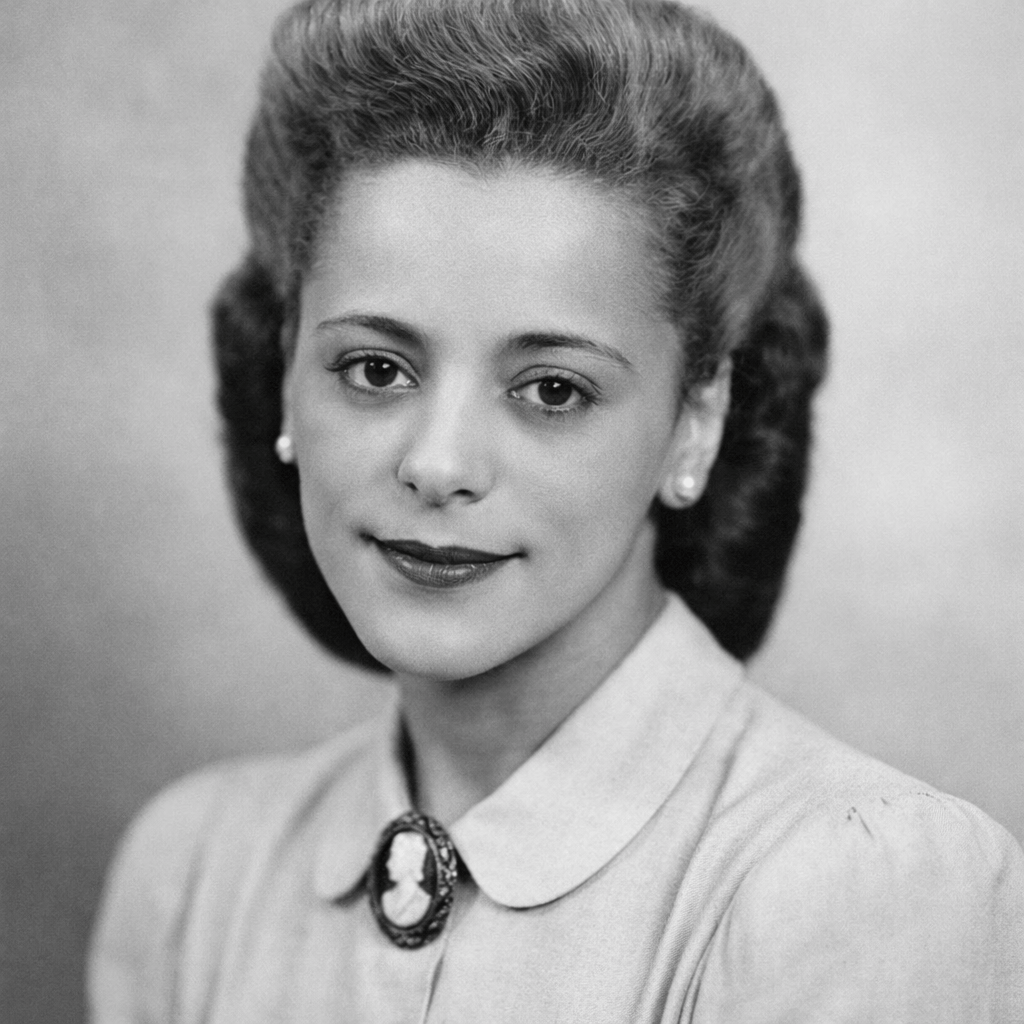
Viola Desmond (1914–1965). Courage, in real time, without certainty of the outcome.
Library and Archives Canada, Public Domain.
I found myself thinking about her not as a symbol, but as a person. The moment before the decision. The weight of knowing that dignity could come with consequences. The courage that isn’t polished in the moment, just lived.
Most people know the headline: a Black woman in 1946 who refused to leave a “whites-only” section of a theatre in Nova Scotia. The story is often told as a symbol of courage, and it is. But what stayed with me this year wasn’t the symbolism. It was the humanity.
I kept thinking about the cost.
About the moment before you decide to do the brave thing, when you know you might pay for it. About what it means to insist on dignity when the world is structured to punish you for it. About the loneliness of being the person who disrupts what everyone else has learned to accept.
We celebrate people like Viola Desmond in hindsight, when the story feels clean and contained. But in real time, courage is rarely neat. It’s visceral. It’s uncertain. It’s not a quote on a graphic. It’s a decision made in the body, under pressure, in a moment where the outcome is not guaranteed.
Sitting with her story made me think about how often Black women are expected to be “strong” in ways that really mean: endure more. Absorb more. Stay composed. Keep producing. Don’t take up too much space. Don’t be “too much.”
We praise the resilience, but we don’t always interrogate why it’s needed so consistently.
Why I didn’t want a “public celebration” this year
There are years when I’ve felt energized by Black History Month, when sharing publicly feels connective, affirming, even joyful. This wasn’t one of those years.
This year, public celebration felt like it might drift into performance. And I’ve become more careful about the difference between:
- speaking because I genuinely have something to say, and
- speaking because the moment expects it.
As someone who works in governance and leadership environments, I think a lot about integrity. About alignment between words and action. About not mistaking visibility for impact. About substance over signalling, even when the signalling is well-intentioned.
If I was going to say something publicly, I wanted it to be grounded, specific, and true to where I actually am. And I couldn’t get there honestly this year. So I didn’t force it.
What “honouring” looked like instead
Quiet doesn’t mean absent. It just means private.
This year, I honoured Black History Month in a way that felt more sustainable for me:
- I reflected, without trying to package it.
- I talked with people I trust, without turning it into a teachable moment.
- I paid closer attention to the everyday dynamics that shape Black experience in professional settings.
I noticed the small things that are easy to normalize if you move too fast:
- Who gets the benefit of the doubt
- Who gets interrupted and then expected to “keep it light.”
- Whose tone is policed
- Who is assumed competent before they’ve proven anything
- Who is asked to soften what would be interpreted as “leadership” in someone else
- Whose toxic behaviour is tolerated and rewarded with attention
And I asked myself a few questions I try to return to often, in life and in work:
- Where am I staying silent to keep things comfortable?
- Where do I have influence, even in small moments, to shift a dynamic?
- What does integrity look like here, not just intention?
This is the part that doesn’t fit neatly into a February post: the ongoing work. The unglamorous work. The work that continues after the spotlight moves on.
A note about choice and seasons
I’m sharing this now because I don’t want my quiet to be misread as indifference. And I also don’t want to reinforce the idea that there’s one “right” way for Black people to engage with Black History Month.
Some years, public celebration is exactly right. Sometimes it’s joyful, necessary, and powerful.
Other years, the most respectful thing you can do is reflect long enough for the history to do something to you. To deepen you. To sharpen your awareness. To change how you show up in the rooms you’re in.
This year, my engagement was quieter. But it was intentional. And it’s not ending with February.
Closing
If you celebrated Black History Month publicly, I hope it came from sincerity and care. If you didn’t, I hope you still found a way to honour the month in a way that felt true. Either way, I hope we remember that Black history is not seasonal. It’s living. It’s present. And it deserves more than a moment.
#BHM2026 #ViolaDesmond #LeadershipWithIntegrity #WomenInLeadership


 Corporate Compass
Leave a comment